
Frequently asked questions
We at TrailersForPontoons.com handle our own warranty. We do occasionally get questions about or trailers, and the occasional trailer problem. Many of the questions seem to often times be the same or similar, so we decided to make this frequently asked questions page to address the common ones.
I’ve towed boats before, but when I saw that 25’ Bennington on your 30’ trailer, it was bigger than anything I’ve ever towed. I have a GMC Yukon, it was six hours home to the Finger Lakes, but everything was fine. When we got home, I noticed the little aluminum cover on the front right wheel was missing. Can I fix this?
The little metal and rubber cover is dust caps. It fits on the end of the axle hub to keep the grease from splashing everywhere. Losing them is a fairly axle dust caps common occurrence on a 96” wide axle. Axle comes from the manufacturer with grease, but we run quality checks. We remove the cap and check for grease. It’s possible we didn’t get it back on properly. Or, if it’s on the right side you might have clipped a curb on the way home and knocked it off. In either case it’s an easy fix. We’ll send a couple dust caps, check that there is grease in the hub and tap the dust cap on with a mallet. Make wide turns.

On the third time I launched and retrieved my pontoon, the winch broke. I got the boat halfway onto the trailer and the winch fell apart. We had a hell of a time, and I don’t think a new winch should break on the third time out.
Sorry for the problem, your trailer must be a couple years old. This had been a difficulty that we resolved in January of 2019. We’ve sold pontoon trailers with 1200 pound front loading winches for years, but we started having failures. It finally hit us that pontoons don’t weigh 1500 pounds anymore. Modern pontoons need a stronger winch. We’re sending our 3200 pound Heavy Duty winch as a replacement, it’s been standard on our trailers since January 2019 and shouldn’t fail with your big pontoon. We use them now on all of our trailers.

My wife followed me and noticed that the center brake light on our trailer didn’t work when I applied the brakes. I checked the wiring it looks good. What could it be ?
The center light bar is a “running” light. It only comes on when you use the lights on your tow vehicle. Check by turning your headlights on, I’ll bet it works.

We have a two year old Mid America trailer we bought from you. It’s full of rust. The manufacturer says it’s out of warranty, I don’t believe a two year old trailer should rust this bad.

We are truly sorry about this problem and although the manufacturers warranty is only one year, and they refused to help you, we’ll replace the trailer. We no longer sell Mid America trailers. Even though we sold them for years, in the past few years the quality of their powder coat finish has deteriorated. We’ve had difficulties that have cost us a lot of money, but we know warranty when we see it. We changed manufacturers, the trailers we sell today have the modern thicker textured powder coat finish. Your new trailer will have this modern coating shown below.

Attached are pictures of rust on our trailer. Serial number attached. Is this warranty?

We checked the serial number of your trailer, and your trailer is five years old. We have a pretty liberal warranty policy, and pride ourselves in this. However, maintenance is still required on any trailer and is the customers responsibility. Your trailer didn’t just rust this year, it probably started in the third or forth year. The rust is around the bunk bracket where the bracket chaffs the frame, yet the trailer frame seems good. We see scraped fenders all the time, when you scratch the paint, on any kind of steel trailer, the steel will rust. Our new Rock Guard Textured Powder Coat probably wouldn’t rust in four years, but scrapes or scratches not touched up will rust on any trailer. The key to keeping any trailer rust free is maintance. Just like a car, your trailer needs a wash every so often and we recomend washing your pontoon trailer at least once or twice a year, especially if you tow your trailer in the late fall or early spring when residue from road salt may be on the roads. After the trailer is washed you should inspect the trailer finish for any scrapes or scratches in the powder coated finish. We have color matched touch up paint that can be applied to those scratches to help protect the exposed steel. If you check your trailer once a year, when the boat is in the water, and touch up any small scrapes or scratches the trailer will look good for years.
I noticed the wood beneath the carpet on my bunks isn’t treated. Shouldn’t it be?
Years ago the EPA made changes in the way wood was treated, the old method was CCA treatment; where Arsenic was the active ingredient used to retard rot. The new treatment is ACQ, the active ingredient is copper sulfate. Copper sulfate can leech through carpet and damage the aluminum pontoons, and can cause small pinholes to form in the bottom of the aluminum tubes. Do to this, all trailer builders are using untreated wood.

My pontoon seems to “buck” when I travel. It’s rubbing the carpet on the winch stand arms.
Normally “bucking” is a sign of a weak frame, but our trailers have strong frames. If the front of your boat is wearing the carpet on the bow stops, it’s a indication that you aren’t using the anti-bucking loop at the base of the winch stand. After you get the boat on the trailer, unhook the winch strap from the boat tow eye, run it down through the loop and back to the boat tow eye. This helps holds the boat on the trailer but also pulls the front down to prevent bucking. It’s also a good idea, especially on a heavier boats to use a ratchet strap from the front eyelet on the left tube, under the center bar of the trailer and back up to the eyelet on the right side tube.

Most newer boats have a bow toe eye on the front or second cross member. If your boat doesn’t have one, it’s an easy addition. Buy a threaded U bolt and drill a couple of holes in the cross member. We also created the Anti-Bucking roller bracket that we have standard on our Super-Duty and Heavy-Duty trailers. This helps to create a even stronger downward pull on the heavier pontoons and tri-tubes. We also have a tri-tube strap as a add on option, allowing secure the winch to the center tube without the risk of the metal hook scratching the center tube.


We’ve had our trailer several years and never needed load guides, but the dam broke and our lake is gone. We will be traveling, do you recommend load guides?


We have thought about making load guides standard with our trailers. However the added cost might cost a sale, and some people truly dont need them, so we make them optional. Even though you haven’t needed them in the past there’s usually a time they are helpful. If you boat on a river with a current or if you are retrieving your boat from a lake on a windy day you’ll appreciate load guides. Also if you are a frequent traveler towing to different lakes, you might want them. Our load guides consist of a set of 4. Generally 2 mounted in the back that help nudge the boat onto the carpeted bunks and 2 near the center keep the boat on straight. Click Here to learn all about Load Guides.
One of your competitors sell electric brakes, a couple hundred dollars less than yours. Our dealer says electric brakes on boat trailers are bad, but he didn’t explain why. WHY ?
Electric brakes are fine for cargo trailers, recreational vehicles, etc. They’re less expensive because there is no “actuator” on the tongue of the trailer, everything is electric. Although you do also need a brake controller in the tow vehicle and some people dont have those. Electric brakes are also easier to install for the trailer manufacturer. The reason quality boat trailer manufacturers don’t use electric brakes is that the solenoid that engages the brakes is on the hub of the axle. The hub of the trailer is submerged in water every time you launch and retrieve your boat. Wires, electricity, and water are a bad combination.
 We’ve sold two special order trailers in the past with electric brakes, but both times our customer ended up regretting it.
How do hydraulic-surge brakes work?

There is an actuator on the tongue of the trailer. When it senses the tow vehicle slowing, a plunger (piston) is compressed and sends brake fluid to the brakes. It’s entirely mechanical, no electricity needed. It esentially acts as having an extra person applying the brakes to a brake pedal in your trailers coupler; the harder you brake the harder the trailer brakes. If you are gently hitting the brakes the trailer brakes gently as well as the force on the piston is slight.
The biggest problem with surge brakes is when you go to back the trailer up, as you get the same force on the piston as you do when braking. This used to require you to get out of your vehicle every time you wanted to back the trailer up, and put a lock out pin in the trailer coupler. This would lock out the brakes, allowing you to back the trailer up. We spend extra money on our brake couplers, having them come standard with an electric back up solenoid. This acts by recieving an electric signal from your tow vehicle, when you put the vehicle in reverse the 5th wire on the wiring harness (reverse light wire) sends a signal back to the electric lock out solenoid. This activates the solenoid which fires a pin in the brake line, blocking the brake fluid from going back to the hydraulic brakes, solving this age old problem. We still give you the emergency lock out pin, but it is only in the case of a failure to the electric back up solenoid.
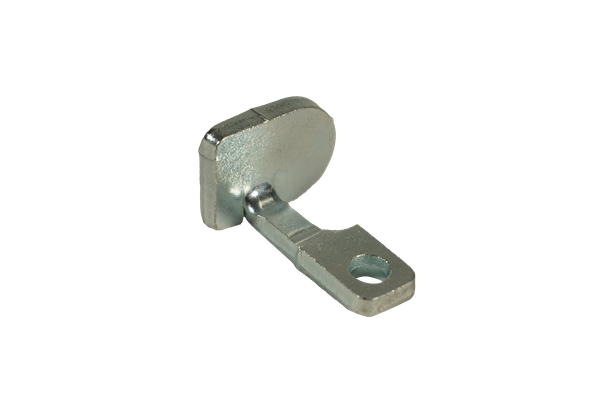
Electric Back-Up Solenoid Emergency brake lock out pin
Do I need a spare tire ?
If you are buying a tandem axle trailer with 4 tires on the ground, you may or may not need a spare. If your buying a single axle trailer, a spare is money well spent. A spare tire is esentially a Murphy Law killer, if you have a spare you may never need it, but if you dont have one that is when you will get a flat. Finding a spare tire mounted on a rim on a Saturday or Sunday can be a real nightmare. We encourage our customers to purchase spare tires and price them as low as possible. When you buy a spare from us with the trailer, we will install it on the trailer for you at no additional charge.
Will the trailer be “ready to go” when I pick it up?
It depends on the information you supply us. As a policy we like to have trailers fully adjusted to fit your pontoon boat when you pick them up. If you order options like a spare tire or load guides, we will install them on the pontoon trailer. During the order process we will ask the length of your pontoon and the length of the deck, as well as the center to center dimension of the pontoon tubes.
If your information is accurate all you’ll have to do is float your pontoon boat onto the trailer. If it’s incorrect, you’ll need a 9/16” wrench and a few minutes labor. Our trailers are fully adjustable to fit all boats.
I have a triple tube pontoon, do I need to support the center bunk?
The main consideration is how the engine attaches to the pontoon boat undercarriage. If the engine is "in" the center tube then the center tube definitely should be supported. If, the center tube is separate from the engine, with the engine mounted on a transom like an ordinary pontoon, then the center tube may not need to be supported. In this situation, the only thing the center bunk would support is the weight of the center tube which is usually only a couple hundred pounds.
Is this your best price and are there any other charges?
The price published on the internet is our rock bottom best price. We get calls from people who like to negotiate, but our policy is to give everyone the best price from the start. Our best customers are those who have done some shopping prior to coming to us, they recognize value. There are no hidden charges, no inbound freight, no make ready, no title or doc fee. The published price is the price you pay, with the exception of sales tax. Our policy applies to options, if you buy a spare tire or load guides, that's the price and we'll mount them on your pontoon trailer at no additional charge.
Do you deliver your trailers?
The low internet price is for "pick up only" in Elkhart, IN. (North-central Indiana). We do have a few retired individuals who can deliver your trailer, but the delivery radius is limited to a distance of 200 miles, and the delivery charge is $3 a mile (one way). So if you are 100 miles from Elkhart, IN the freight would be $300, if you are 200 miles away the freight would be $600.
What is the warranty?
Our trailers are covered, hitch to tail lights with a full one year limited warranty. Tires are prorated by the tire manufacturer for wear and may in some cases be good for more than a year. See our Warranty Page.
What color is the trailer?
Our pontoon trailers are black and the carpeted bunks are black. The reason they are black is that black is a soft color and touches up easily with ordinary black spray paint. Our galvanized trailers are a silver galvanized color with the same black bunks.
How are your pontoon trailers galvanized?
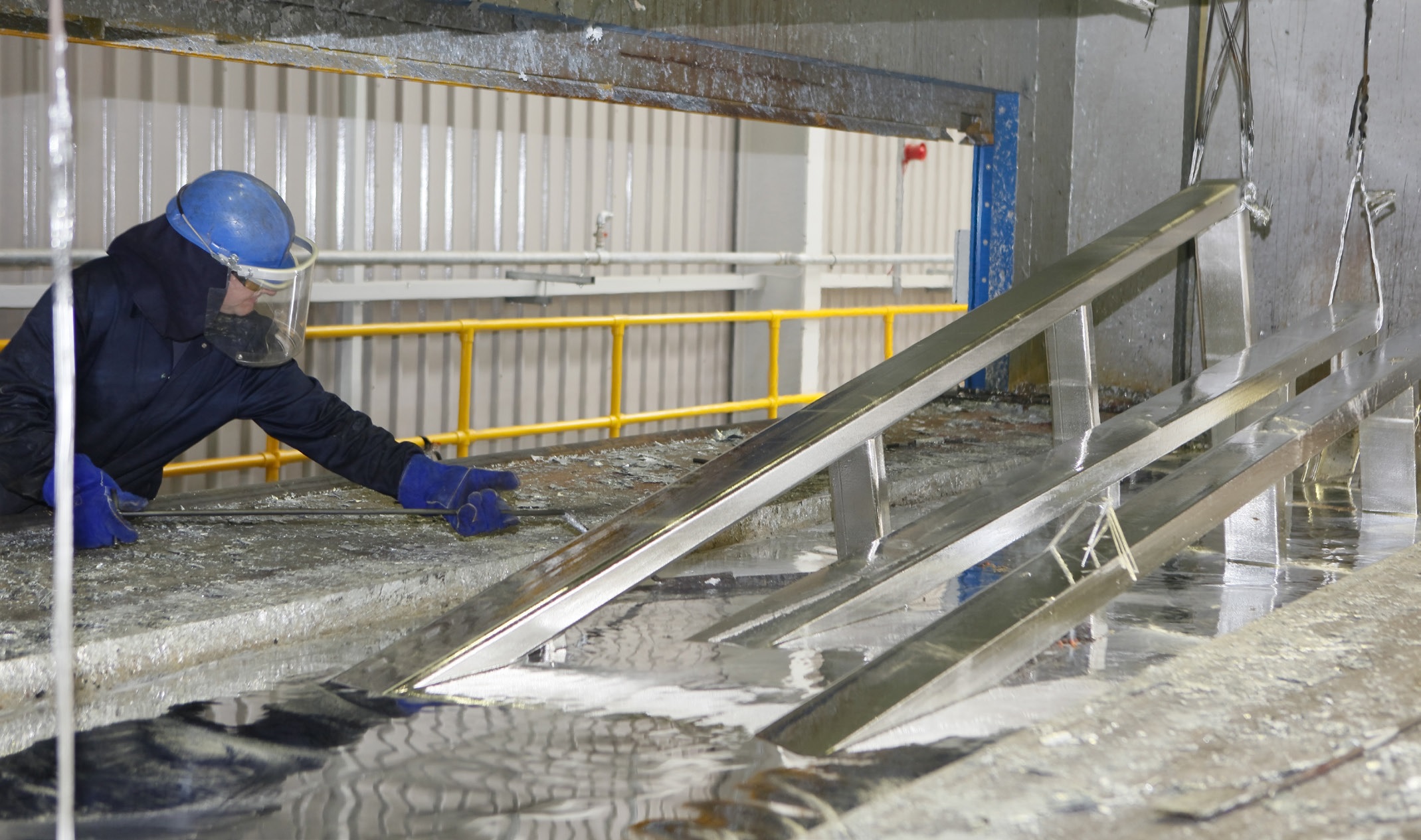
Galvanizing is a process that seals steel against oxidation and it is the best defense against the corrosive effects of salt water or salt-brine from Mid-West roads. If you boat in or around salt water your pontoon trailer must be galvanized. Salt water will quickly deteriorate, (structurally as well as cosmetically) a painted pontoon trailer. There is a trend among smaller pontoon trailer manufacturers who have not invested in the expensive powder coat system to promote galvanized frames. Salt water boaters must be especially cautious of these trailers. They are not promoted as salt water "ready", the claim is simply that they are galvanized. The problem is that these trailers are made with pre-galvanized steel. That steel is cut and welded to make the trailer frame, the cut points and especially the welds will rust right away. Our trailers are hot dipped galvanized so the frame is made from our regular steel, after it is completed it is taken to a galvanizer where it is dipped into the tank of galvanic solution, coating the entire trailer.
Which is better, the bunk pontoon trailer or the center-lift pontoon boat trailer?
This is a question that has no standard answer; although we generally favor the bunk style pontoon trailer for stability on the highway. There are however applications where the center lift pontoon boat trailer may be beneficial. If you launch and retrieve in shallow water; under 3’, the center-lift trailer can sit your pontoon boat on the shore. If you’ve have a storage situation where you want to put your pontoon in a garage with a low overhead door, you can lower the frame and slide many pontoon boats under low doors. If you and a neighbors want to go together and buy a single trailer to haul different boats, the center lift pontoon boat trailer may make sense. Because of unique construction features our Lo-Loader center-lift pontoon trailer is absolutely the safest and most stable pontoon boat trailer of its kind. But, even with our unique design, your pontoon boat is traveling on a 46” wide axle versus the 96” wide axle of the bunk style pontoon trailer. For most situations, a wider more stable pontoon trailer makes more sense than a narrow axle pontoon trailer, no matter how safely the narrow axle pontoon trailer is made.